Easy High-Protein Mediterranean Lemon-Dill Chicken Bowls
Introduction
In the bustling world of modern nutrition, finding a meal that perfectly balances convenience, exceptional flavor, and robust nutritional value can often feel like a culinary quest. Enter the Easy High-Protein Mediterranean Lemon-Dill Chicken Bowl, a dish that has rapidly ascended the ranks of meal-prep favorites and healthy dinner solutions. This isn’t just another chicken salad; it is a vibrant celebration of fresh ingredients, zesty aromatics, and lean muscle-building protein wrapped in a bowl.
The appeal of this dish lies in its simplicity and its brightness. The sharp, citrusy punch of fresh lemon juice cuts through the savory richness of pan-seared chicken, while the grassy, anise-like notes of fresh dill provide a sophisticated herbal backdrop. When paired with a base of nutrient-dense grains and a colorful array of crisp vegetables, the result is a meal that satisfies the palate without weighing down the body. Whether you are an athlete looking to maximize protein intake, a busy professional needing a quick 30-minute dinner, or someone simply trying to eat cleaner, this bowl offers a customizable canvas for wholesome eating.
The History
To truly appreciate the Lemon-Dill Chicken Bowl, one must look back at the culinary traditions of the Mediterranean basin. The pairing of lemon and dill is not a modern fusion experiment but a time-honored combination deeply rooted in Greek, Turkish, and Levantine cuisines. In ancient Greece, lemons were prized not only for their flavor but for their preservative and medicinal qualities. Dill, known as “anethon,” was revered for its digestive properties and was frequently used to flavor fish and poultry.
The concept of the “bowl,” however, is a more contemporary evolution. Historically, Mediterranean meals were served as a “mezze” or a large communal platter where proteins, grains, and salads were shared. The modern “grain bowl” trend adapts this philosophy for the individual eater, stacking components vertically rather than horizontally. This shift allows for better portion control and easier transport, making it ideal for the lunchbox. By combining the ancient flavor profile of lemon-dill chicken with the modern utility of the grain bowl, we create a dish that honors history while serving the needs of the 21st-century lifestyle.
Ingredients Breakdown
Understanding the role of each component in this bowl helps you appreciate why the recipe works so well. It is a study in texture and flavor contrast.
The Protein: Chicken Breast or Thighs
We utilize skinless chicken breast for the ultimate high-protein, low-fat option, though thighs offer a juicier texture. Chicken is a complete protein, containing all nine essential amino acids necessary for muscle repair and growth. When marinated in acid (lemon), the proteins denature slightly, resulting in a more tender bite after cooking.
The Aromatics: Lemon and Dill
Lemon: Beyond providing Vitamin C, the citric acid in lemon juice acts as a natural tenderizer for the meat. The zest contains essential oils that provide the intense fragrance associated with Mediterranean cooking.
Dill: Fresh dill is crucial here; dried dill lacks the volatile oils needed for this specific flavor profile. Dill is rich in antioxidants and has been used traditionally to soothe the stomach.
The Base: Quinoa or Brown Rice
Unlike white rice, which offers a quick spike in blood sugar, quinoa and brown rice are complex carbohydrates. Quinoa is particularly notable as it is one of the few plant sources that is also a complete protein, boosting the overall protein count of the bowl significantly.
The Crunch: Cucumber and Red Onion
Hydration is key to satiety. Cucumbers are over 95% water, adding volume to the meal without adding calories. Red onion provides a sharp, sulfurous bite that balances the sweetness of the lemon and the earthiness of the grains.
Step-by-Step Recipe
Creating the perfect bowl requires attention to timing, specifically regarding the marination and the cooking of the grains.
- Preparation of the Marinade: In a small bowl, whisk together fresh lemon juice, olive oil, minced garlic, dried oregano, salt, and black pepper. The oil acts as an emulsifier, carrying the fat-soluble flavors of the oregano into the meat.
- Marinating the Chicken: Place your chicken breasts in a shallow dish or a resealable bag. Pour the marinade over the chicken, ensuring it is fully coated. Let this sit for at least 20 minutes. If you have time, 2 hours in the refrigerator yields superior flavor penetration.
- Cooking the Grains: While the chicken marinates, rinse your quinoa or brown rice thoroughly. Cook according to package instructions, usually a 2:1 ratio of water to grain. Fluff with a fork once cooked and let it cool slightly.
- Searing the Chicken: Heat a large skillet or grill pan over medium-high heat. Add a touch of oil. Remove chicken from the marinade (shaking off excess) and sear for 5-7 minutes per side until the internal temperature reaches 165°F (74°C).
- Resting and Chopping: This is the most critical step. Let the chicken rest on a cutting board for 5 minutes. This allows the juices to redistribute. Slice against the grain into bite-sized strips.
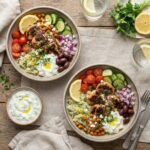
- Assembly: Divide the cooked grains among your bowls. Top with the sliced chicken, diced cucumbers, cherry tomatoes, red onion, and a generous handful of fresh chopped dill.
- The Finish: Drizzle with a little extra virgin olive oil and a squeeze of fresh lemon right before serving to wake up the flavors.
Tips
- Zest Before You Juice: Always zest your lemons before cutting them in half to juice them. It is impossible to zest a lemon once it has been squeezed.
- Don’t Overcrowd the Pan: When searing the chicken, ensure there is space between the pieces. Overcrowding creates steam, which prevents the beautiful golden-brown Maillard reaction crust from forming.
- Meal Prep Friendly: This recipe is excellent for meal prep. Store the components separately if possible. Keep the dressing on the side to prevent the greens from wilting and the grains from becoming soggy over 3-4 days.
- Room Temperature Veggies: Take your vegetables out of the fridge 15 minutes before assembling. Cold veggies can solidify the healthy fats in the dressing, muting the flavor.
Variations and Customizations
The beauty of the bowl format is its adaptability. Here is how you can tweak the recipe to fit different dietary needs or flavor cravings:
- The Vegetarian Swap: Replace the chicken with crispy chickpeas or pressed extra-firm tofu. Marinate the tofu in the same lemon-dill mixture and pan-fry until golden.
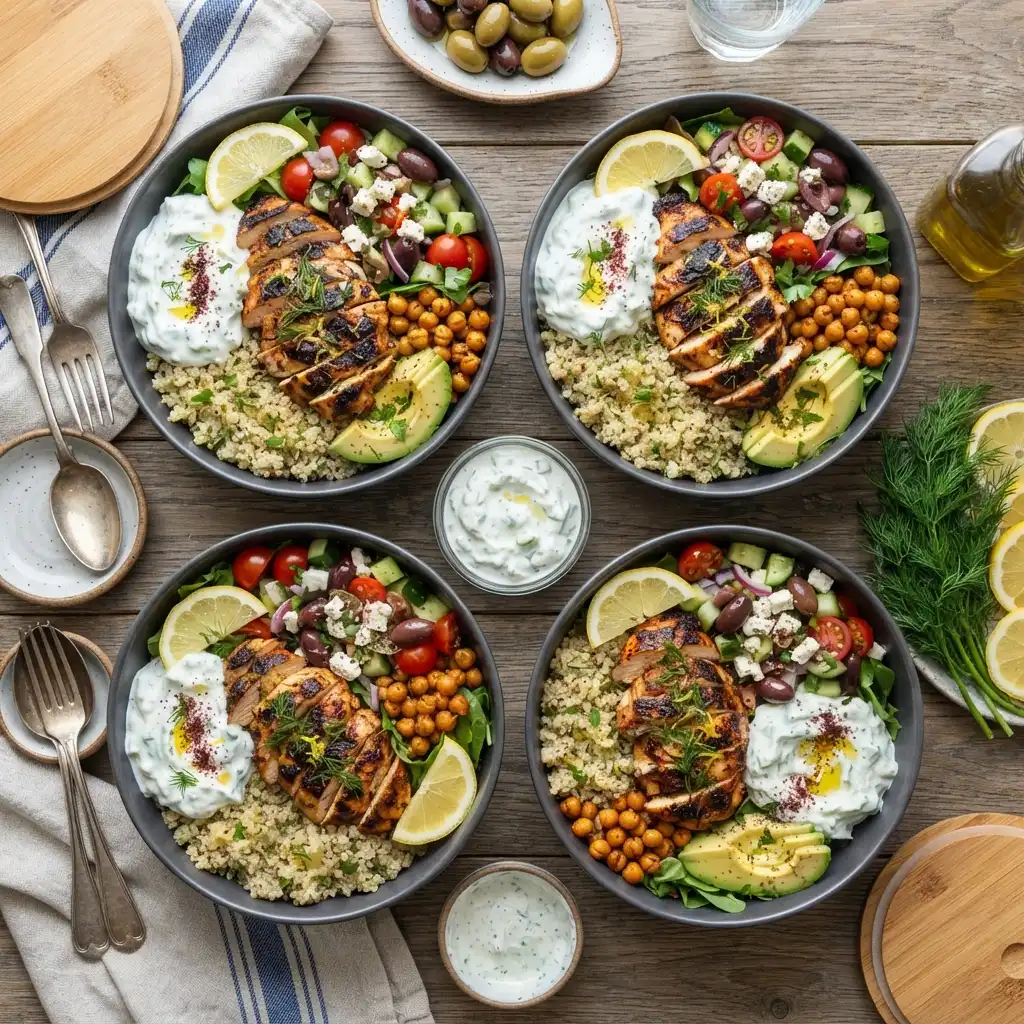
- The Creamy Element: Add a dollop of Tzatziki sauce or crumbled Feta cheese. The saltiness of the feta pairs exceptionally well with the acidity of the lemon.
- Spicy Kick: Add a pinch of red pepper flakes or a drizzle of harissa paste to the marinade for a North African twist.
- Low-Carb/Keto: Swap the quinoa or rice for cauliflower rice or a base of mixed leafy greens and shredded cabbage.
- Added Healthy Fats: Top the bowl with sliced avocado or a handful of Kalamata olives to increase the satiety factor and healthy monounsaturated fats.
Health Considerations and Nutritional Value
This dish is a powerhouse of macronutrients and micronutrients designed to fuel the body efficiently.
High Protein Content: With approximately 35-40 grams of protein per serving (depending on portion size), this bowl supports muscle synthesis and keeps you full longer than carbohydrate-heavy meals. Protein has a high thermic effect, meaning your body burns more calories digesting it.
Heart-Healthy Fats: The primary fat source is olive oil, rich in oleic acid and polyphenols, which are linked to reduced inflammation and improved heart health.
Glycemic Control: By pairing protein and fiber-rich grains with vegetables, this meal has a low glycemic load. This prevents the sharp insulin spikes associated with processed foods, providing steady energy throughout the afternoon.
Micronutrient Density:
- Vitamin C: From the lemon and tomatoes, supporting immune function.
- Potassium: From the chicken and vegetables, essential for blood pressure regulation.
- Magnesium: Found in the quinoa and leafy greens, vital for over 300 biochemical reactions in the body.
Ingredients
- 1.5 lbs (700g) boneless, skinless chicken breasts
- 1 cup uncooked quinoa or brown rice
- 2 cups water or chicken broth (for cooking grains)
- 3 large lemons (2 for juice/zest, 1 for garnish)
- 1/4 cup fresh dill, chopped (plus more for garnish)
- 3 cloves garlic, minced
- 3 tbsp extra virgin olive oil (divided)
- 1 tsp dried oregano
- 1 English cucumber, diced
- 1 cup cherry tomatoes, halved
- 1/2 red onion, thinly sliced
- Salt and black pepper to taste
- Optional: 1/2 cup crumbled feta cheese
Directions
- Cook the Grains: Rinse the quinoa or rice under cold water. In a medium saucepan, combine grains and water/broth. Bring to a boil, reduce heat to low, cover, and simmer for 15 minutes (quinoa) or 45 minutes (brown rice) until liquid is absorbed. Fluff with a fork and set aside.
- Prepare the Marinade: In a small bowl, whisk together the juice of 2 lemons, 2 tablespoons of olive oil, minced garlic, dried oregano, half of the chopped fresh dill, salt, and pepper.
- Marinate Chicken: Place chicken breasts in a dish and pour the marinade over them. Turn to coat. Let sit for at least 20 minutes.
- Cook Chicken: Heat the remaining 1 tablespoon of olive oil in a large skillet over medium-high heat. Add chicken and cook for 6-7 minutes per side, or until internal temperature reaches 165°F (74°C).
- Rest and Slice: Remove chicken from heat and let rest for 5 minutes. Slice into strips.
- Assemble Bowls: Divide cooked grains into 4 bowls. Top with sliced chicken, cucumber, tomatoes, red onion, and remaining fresh dill.
- Serve: Garnish with lemon wedges and feta cheese if desired. Serve immediately.
FAQ
Can I freeze this meal?
Yes, the chicken and grains freeze well for up to 3 months. However, it is best to freeze them without the fresh vegetables (cucumber/tomato) as they will become mushy upon thawing. Add fresh veggies when you reheat the bowl.
Is this recipe gluten-free?
Yes, naturally. Chicken, vegetables, lemon, and dill are gluten-free. Just ensure you use certified gluten-free quinoa or rice, as cross-contamination can sometimes occur in processing facilities.
Can I use chicken thighs instead?
Absolutely. Boneless, skinless chicken thighs are more forgiving and stay juicier than breasts. You may need to cook them for an extra 2-3 minutes depending on thickness.
How do I make the dill flavor stronger?
If you love dill, add a teaspoon of dried dill weed to the marinade in addition to the fresh chopped dill used as a garnish. Dried herbs often penetrate meat better during the marinating process.
Summary
This high-protein Mediterranean bowl combines zesty lemon-dill chicken with nutrient-dense grains and fresh vegetables for a quick, healthy meal. It is perfect for meal prep, offering a balanced mix of lean protein, complex carbs, and heart-healthy fats.