Introduction
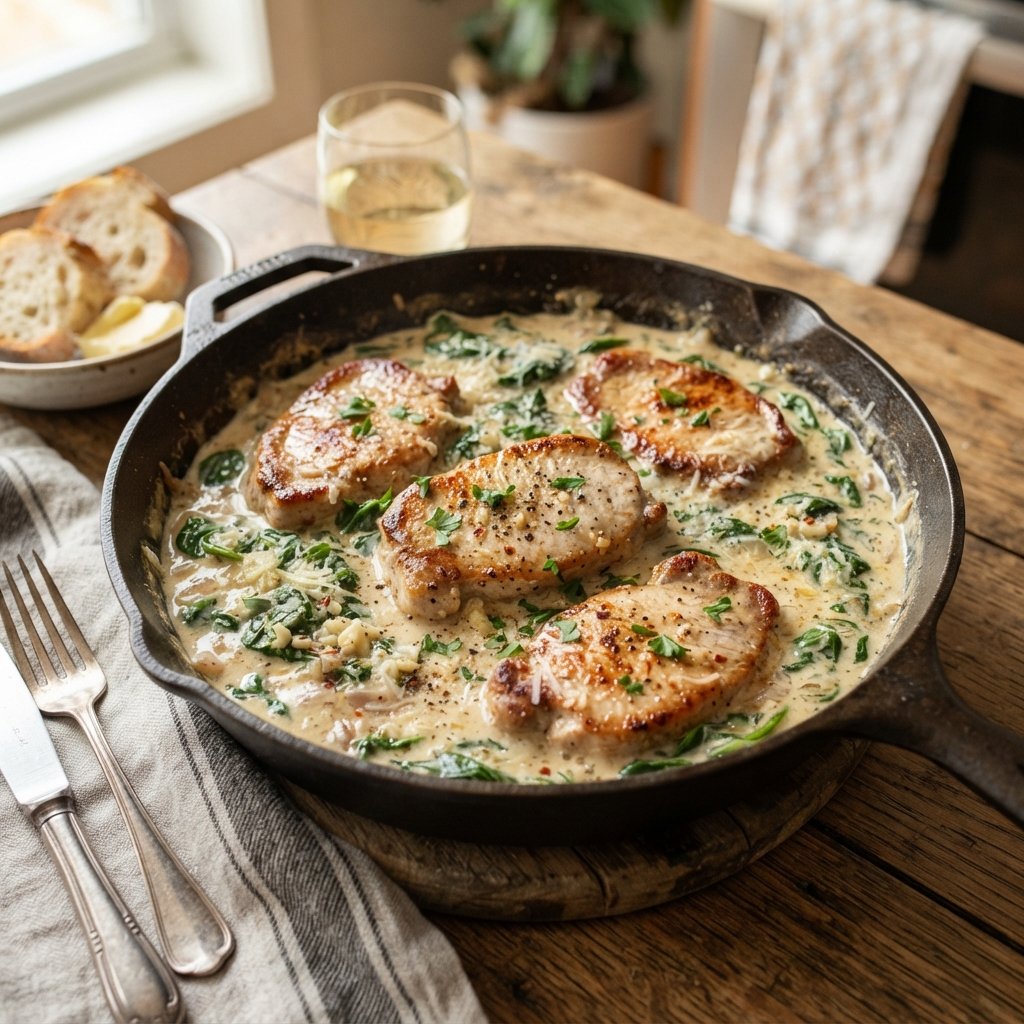
Welcome to the culinary intersection of comfort and elegance. There are few dishes that strike the perfect balance between a hearty, protein-rich main course and a luxurious, velvety sauce quite like Boneless Pork Chops in Creamy Garlic Spinach Sauce. This dish transforms a humble cut of meat into a restaurant-quality experience that can be prepared right in your own kitchen in under 30 minutes. Whether you are looking to impress dinner guests or simply want to elevate your Tuesday night routine, this recipe delivers a symphony of flavors: the savory depth of seared pork, the pungent warmth of roasted garlic, the earthy freshness of wilted spinach, and the rich, comforting embrace of a cream-based reduction.
The magic of this dish lies in its simplicity. It does not require obscure ingredients or hours of marinating. Instead, it relies on proper technique—specifically, achieving a golden-brown sear on the pork to lock in juices and deglazing the pan to capture every bit of flavor for the sauce. The result is a meal that feels indulgent yet remains accessible, serving as a perfect canvas for your favorite sides, from mashed potatoes to crusty artisan bread.
The History
The history of pork chops is as old as domesticated swine, but the specific preparation of “smothering” meat in a cream sauce has roots deeply embedded in European culinary traditions, particularly French and Italian cuisines. In France, the technique of making a sauce crème often involves reducing heavy cream with aromatics like shallots and garlic, a method famously used in dishes like Poulet à la Crème (Chicken in Cream Sauce). As immigrants brought these techniques to the Americas, the method was adapted to local staples.
In the United States, pork chops became a ubiquitous household staple in the mid-20th century. However, they were often overcooked and served dry. The modern iteration of creamy garlic pork chops represents a culinary correction—a return to the French technique of pan-saucing to ensure moisture and flavor. The addition of spinach is a more contemporary twist, influenced by the popularity of “Florentine” style dishes (which traditionally feature spinach) and the modern desire to incorporate more greens into rich, comfort-food meals. This dish is a beautiful fusion of old-world sauce-making techniques and modern health-conscious plating.
Ingredients Breakdown
To truly master this dish, one must understand the role each component plays in the final flavor profile. Here is a deep dive into the chemistry and culinary function of our key ingredients:
- Boneless Pork Chops: We choose boneless loin chops for this recipe primarily for their uniform thickness, which ensures even cooking. Without the bone to act as an insulator, the meat cooks faster, making it ideal for a quick weeknight dinner. Look for chops that are at least 1-inch thick; thinner chops tend to dry out before a good sear can be established.
- Heavy Cream: This is the backbone of the sauce. Heavy cream (with a fat content of 36% or higher) is essential because it can withstand high heat without curdling or separating, unlike milk or half-and-half. The fat content carries the flavor of the garlic and herbs, coating the palate in a luxurious texture.
- Fresh Garlic: Garlic is the soul of this dish. We use fresh cloves rather than powder because fresh garlic releases allicin when crushed or minced, providing a sharp, aromatic bite that mellows into sweetness as it cooks in the butter and cream. It provides the necessary pungency to cut through the richness of the dairy.
- Baby Spinach: Spinach serves two purposes here: flavor and texture. It adds a slight earthy bitterness that balances the sweet cream and salty pork. Visually, the vibrant green against the white sauce and golden meat makes the dish appetizing. Baby spinach is preferred over mature spinach because it wilts almost instantly and has a more tender stem.
- Chicken or Vegetable Broth: While cream provides the body, broth provides the depth. Deglazing the pan with broth lifts the “fond” (the browned bits of meat and spice stuck to the pan), which is pure flavor. It also thins the cream slightly, preventing the sauce from becoming too heavy or cloying.
- Parmesan Cheese: Adding freshly grated Parmesan adds a layer of umami and saltiness. It also acts as a natural thickener for the sauce as it melts, helping the sauce cling to the pork chops.
Step-by-Step Recipe
Creating this dish is a process of layering flavors. We do not simply throw everything into a pot; we build the dish in stages to maximize taste.
Phase 1: Preparation and Seasoning
Begin by removing your pork chops from the refrigerator 20 minutes before cooking. Cold meat sears poorly; it lowers the pan temperature and steams the meat rather than browning it. Pat the chops completely dry with paper towels. Moisture is the enemy of the sear. Season both sides generously with kosher salt and freshly cracked black pepper. You can also add a dusting of garlic powder and paprika for an extra layer of flavor.
Phase 2: The Sear
Heat a large skillet (cast iron or stainless steel works best) over medium-high heat. Add a combination of olive oil and butter. The oil prevents the butter from burning, while the butter adds flavor. Once the fat is shimmering and foaming slightly, lay the pork chops in the pan. Do not overcrowd the pan; cook in batches if necessary. Sear for 4-5 minutes per side until a deep golden-brown crust forms. The internal temperature should reach 145°F (63°C). Remove the chops and let them rest on a plate. Do not wash the pan.
Phase 3: Building the Aromatics
In the same pan, with the pork juices still present, reduce the heat to medium. Add a bit more butter if the pan is dry. Toss in your minced garlic. Sauté for about 1 minute until fragrant. Be careful not to burn the garlic, or it will turn bitter. If you are adding mushrooms or onions, this is the time to cook them until softened.
Phase 4: The Sauce Reduction
Pour in the chicken broth to deglaze the pan. Use a wooden spoon to scrape up all the browned bits from the bottom. Let this simmer for 2 minutes to reduce slightly. Then, pour in the heavy cream and stir in the Parmesan cheese. Let the sauce simmer gently (do not boil rapidly) until it thickens enough to coat the back of a spoon.
Phase 5: The Finish
Turn off the heat. Stir in the fresh spinach. The residual heat of the sauce will wilt the spinach perfectly in about 30 seconds. Taste the sauce and adjust seasoning with salt, pepper, or a squeeze of lemon juice to brighten the flavor. Return the pork chops to the pan, spooning the sauce over them to warm them through before serving.
Tips
- The Thermometer is Your Friend: Pork has a reputation for being dry, but that is usually due to overcooking. The USDA recommends cooking pork to 145°F followed by a 3-minute rest. At this temperature, the meat will be juicy and slightly pink in the center. Use an instant-read thermometer to ensure perfection every time.
- Resting the Meat: Never skip the resting phase after searing. When meat cooks, the juices are driven to the center. Resting allows the fibers to relax and reabsorb those juices. If you cut into it immediately, the juices will run out onto the plate, leaving you with dry meat.
- Prevent Curdling: When adding cream to a hot pan, lower the heat. High, rolling boils can cause dairy to separate. A gentle simmer is all that is needed to thicken the sauce.
- Grate Your Own Cheese: Pre-grated Parmesan in the green shaker can contains anti-caking agents (like cellulose) that prevent it from melting smoothly into a sauce. For a silky texture, buy a wedge of Parmigiano-Reggiano and grate it yourself.
- Pan Selection: A light-colored stainless steel pan is helpful because it allows you to see the color of the fond (the browned bits) clearly, ensuring you don’t burn the garlic or the sauce reduction.
Variations and Customizations
This recipe is a versatile template that can be adapted to suit various dietary needs and flavor preferences:
- The “Florentine” Upgrade: Add sun-dried tomatoes and artichoke hearts along with the spinach for a Mediterranean twist that adds acidity and texture.
- Mushroom Lover’s Delight: Sauté sliced cremini or button mushrooms with the garlic. The earthy flavor of mushrooms pairs exceptionally well with pork and cream.
- Spicy Kick: Add red pepper flakes or a dash of cayenne pepper to the cream sauce. The heat contrasts beautifully with the cooling richness of the dairy.
- Dairy-Free Option: Substitute heavy cream with full-fat coconut milk or a high-quality cashew cream. Use nutritional yeast instead of Parmesan for a cheesy flavor without the dairy.
- Herb Infusion: While garlic is the star, adding fresh thyme, rosemary, or sage to the pan while searing the pork will infuse the oil and butter with woody, aromatic notes that complement the meat.
- Wine Reduction: For a more sophisticated adult version, deglaze the pan with a splash of dry white wine (like Pinot Grigio or Sauvignon Blanc) before adding the broth and cream.
Health Considerations and Nutritional Value
While this dish is undeniably rich, it can fit into a balanced diet when portioned correctly. Pork is an excellent source of high-quality protein, thiamine, selenium, and zinc. It is generally leaner than beef, especially if you trim visible fat. Spinach is a nutrient powerhouse, loaded with Vitamin K, Vitamin A, manganese, and folate, providing fiber and antioxidants to the meal.
The primary caloric density comes from the heavy cream and butter. To make this dish lighter, you can substitute half of the heavy cream with low-sodium chicken broth or use half-and-half, though the sauce will be thinner. Another strategy is to serve smaller portions of the pork (3-4 oz) and bulk up the plate with a large side of steamed broccoli, cauliflower rice, or a fresh green salad to increase volume and fiber without adding excessive calories. Always be mindful of sodium levels, especially if using store-bought broth and Parmesan cheese.
Ingredients
- 4 Boneless Pork Loin Chops (approx. 1-inch thick)
- 1 teaspoon Kosher Salt
- 1/2 teaspoon Black Pepper
- 1 teaspoon Garlic Powder
- 2 tablespoons Olive Oil
- 2 tablespoons Unsalted Butter
- 4 cloves Garlic, minced
- 1/2 cup Chicken Broth (low sodium preferred)
- 1 cup Heavy Cream
- 1/2 cup Parmesan Cheese, freshly grated
- 3 cups Fresh Baby Spinach, packed
- 1/2 teaspoon Dried Thyme or Italian Seasoning (optional)
- Fresh Parsley, chopped (for garnish)
Directions
- Prep the Pork: Pat the pork chops dry with paper towels. In a small bowl, mix the salt, pepper, and garlic powder. Rub this mixture evenly over both sides of the pork chops.
- Sear the Meat: Heat the olive oil in a large skillet over medium-high heat. Once hot, add the pork chops. Cook for 4-5 minutes per side until golden brown and the internal temperature reaches 145°F. Remove chops from the pan and set aside on a warm plate. Cover loosely with foil.
- Sauté Aromatics: Reduce heat to medium. Add the butter to the same skillet. Once melted, add the minced garlic (and dried thyme if using). Sauté for 1 minute until fragrant, stirring constantly to prevent burning.
- Deglaze: Pour in the chicken broth. Use a wooden spoon to scrape the browned bits from the bottom of the pan. Let simmer for 2 minutes to reduce slightly.
- Create the Sauce: Lower the heat to medium-low. Stir in the heavy cream and grated Parmesan cheese. Simmer gently for 3-5 minutes until the sauce thickens. It should coat the back of a spoon.
- Wilt Spinach: Turn off the heat. Stir in the fresh spinach. Let it sit in the hot sauce for 1 minute until wilted. Taste the sauce and add more salt or pepper if needed.
- Serve: Return the pork chops to the skillet, nestling them into the sauce. Spoon extra sauce and spinach over the top of the chops. Garnish with fresh parsley and serve immediately.
FAQ
Can I use bone-in pork chops?
Yes, you can. However, bone-in chops take longer to cook. You will need to increase the searing time by 2-3 minutes per side and ensure the meat near the bone reaches 145°F.
My sauce is too thin. How do I fix it?
If the sauce hasn’t thickened after simmering, you can create a slurry by mixing 1 teaspoon of cornstarch with 1 tablespoon of cold water. Whisk this into the simmering sauce and cook for another minute until thickened.
Can I make this ahead of time?
This dish is best served fresh. Cream sauces can separate or become grainy when reheated. However, you can sear the pork and prep the ingredients ahead of time, then cook the sauce and finish the dish just before serving.
What sides go best with this?
Because the sauce is rich, this pairs wonderfully with starches that can soak it up. Mashed potatoes, egg noodles, rice pilaf, or crusty French bread are excellent choices. For a low-carb option, serve over cauliflower mash or zucchini noodles.
Can I freeze the leftovers?
It is not recommended to freeze dishes with heavy cream sauces, as the dairy tends to separate and become oily upon thawing. Leftovers are best kept in the refrigerator for up to 3 days.
Summary
Tender, seared boneless pork chops are smothered in a luxurious, velvety sauce made from garlic, heavy cream, Parmesan, and fresh spinach. This quick yet elegant dish delivers a perfect balance of savory richness and fresh earthiness for a satisfying meal.