Introduction
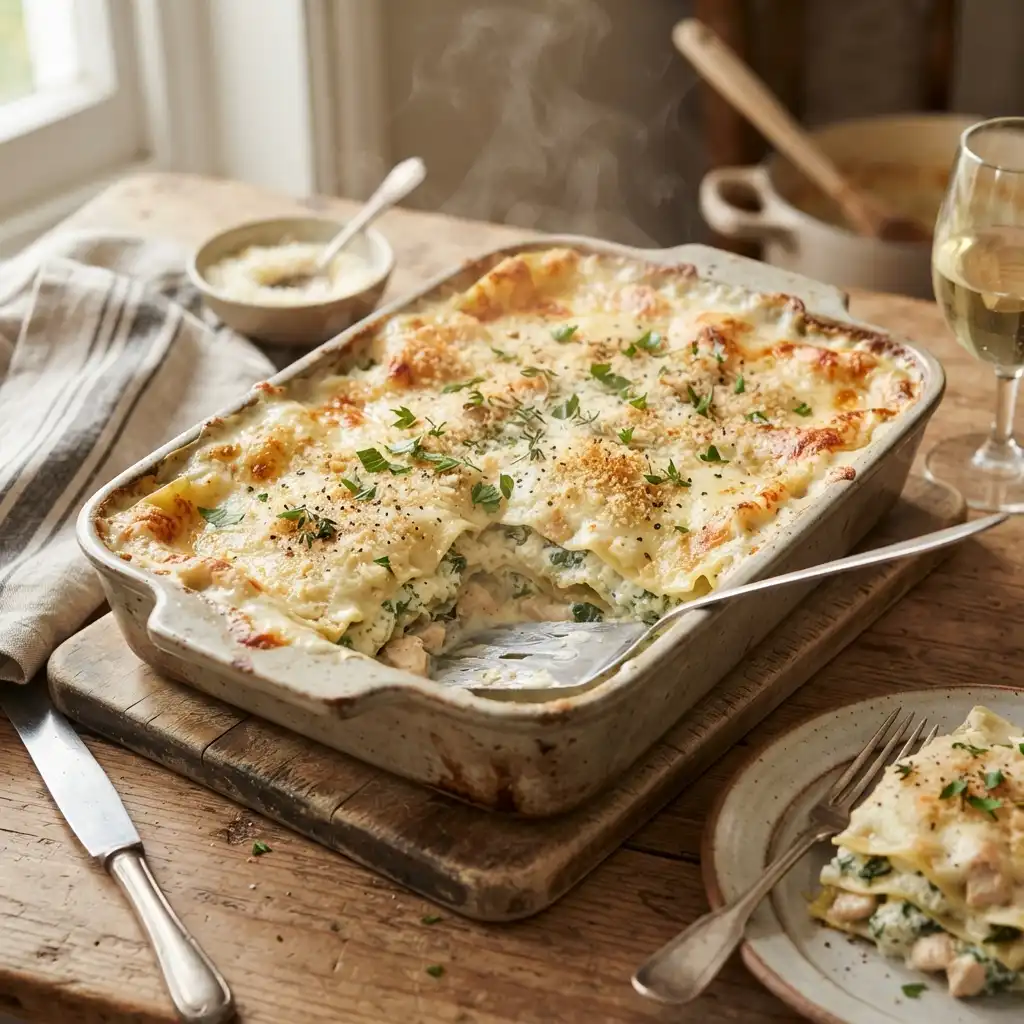
There are few dishes in the culinary world that evoke a sense of pure, unadulterated comfort quite like a lasagna. While the classic red-sauce version with meaty Bolognese is a staple in many households, there exists a richer, more decadent cousin that often gets overlooked: the comforting creamy white lasagna. This dish is not merely a meal; it is an experience of texture and flavor that wraps around you like a warm blanket on a cold evening. It is a symphony of al dente pasta sheets, velvety béchamel or ricotta-based sauces, and a triumvirate of cheeses that melt into a golden, bubbling crust.
The appeal of white lasagna lies in its subtlety. Without the acidity of tomatoes to cut through the richness, the flavors of the dairy, the garlic, the herbs, and the savory notes of the meat or vegetables shine with a clarity that is both elegant and deeply satisfying. Whether you are preparing a feast for a large family gathering or seeking a sophisticated yet cozy dinner for two, this guide will walk you through every nuance of creating the ultimate creamy white lasagna.
The History
To understand the white lasagna, we must first look back at the origins of lasagna itself. The history of this layered pasta dish is a subject of much debate among food historians, with roots stretching back to ancient Greece and Rome, where flat sheets of dough were layered with various ingredients. However, the dish as we recognize it today began to take shape in medieval Italy. The earliest known cookbook to mention “lasagne” is the Liber de Coquina (The Book of Cookery), written in the late 13th or early 14th century in Naples. Interestingly, this early version did not contain tomatoes (which were not introduced to Europe until the Columbian Exchange) and often relied on cheese and spices.
The “white” aspect of lasagna is deeply tied to the French influence on Italian cuisine, specifically the introduction of Béchamel sauce. In the 17th century, as culinary techniques crossed the Alps, the Italian lasagne alla besciamella emerged. This version utilized a white mother sauce made from butter, flour, and milk, seasoned with nutmeg. It became a staple in the Emilia-Romagna region, particularly in Bologna, where Lasagne Verdi (green lasagna made with spinach in the dough) is still served with a white sauce and ragù.
In the United States, the concept of “white lasagna” evolved differently. While traditionalists stick to the Béchamel, American home cooks in the mid-20th century began experimenting with ricotta cheese mixtures and Alfredo-style sauces to create a creamier, heavier texture that appealed to the American palate. This divergence created the two main schools of white lasagna we see today: the elegant, sauce-bound European style and the rich, cheese-heavy American comfort style. Both are delicious, but both require a mastery of balancing richness with structure.
Ingredients Breakdown
Creating a masterpiece requires understanding the building blocks. In a white lasagna, every ingredient plays a critical role because there is no tomato sauce to hide imperfections.
- The Pasta: You have two choices here: no-boil (oven-ready) noodles or traditional dry noodles that require boiling. For the creamiest texture, traditional noodles boiled to a precise al dente are superior. They absorb the white sauce beautifully without becoming mushy. If you choose no-boil noodles, ensure your sauce is slightly thinner, as the pasta needs to draw moisture from the liquid to cook.
- The Cheese Trio: A great white lasagna relies on three types of cheese. First, Ricotta provides the body and the classic grainy-yet-creamy texture found in the filling layer. Whole milk ricotta is non-negotiable for the best flavor. Second, Mozzarella is the glue. Low-moisture, whole milk mozzarella melts evenly and provides the stretch. Fresh mozzarella can be used for pockets of creaminess but releases more water. Third, Parmesan (or Parmigiano-Reggiano) is the flavor bomb. It adds the necessary salt and umami depth that cuts through the fat of the other cheeses.
- The White Sauce Base: If making a Béchamel, you need butter, flour, and whole milk. The ratio is key to avoiding a gloopy or runny sauce. If making a Ricotta-cream hybrid, heavy cream or half-and-half is often used to loosen the ricotta mixture, ensuring it spreads easily between the layers.
- Aromatics and Seasonings: Garlic is essential, usually sautéed in butter to infuse the fat. Fresh herbs like parsley, basil, and thyme brighten the dish. A pinch of nutmeg is the secret weapon in white sauces; it adds a warm, earthy note that complements dairy perfectly without making the dish taste like dessert.
- The Protein (Optional): While vegetarian versions are popular, ground Italian sausage or shredded rotisserie chicken are the most common additions. Sausage adds a fennel-spiced kick that contrasts well with the mild cheese, while chicken keeps the flavor profile clean and light.
Step-by-Step Recipe
Phase 1: Preparation and Sauce Making
Begin by preheating your oven to 375°F (190°C). If using traditional lasagna noodles, bring a large pot of heavily salted water to a boil. Cook the noodles according to package directions but subtract two minutes from the suggested time. You want them very firm, as they will finish cooking in the oven. Drain and lay them flat on oiled baking sheets to prevent sticking.
While the water heats, prepare your white sauce. In a medium saucepan over medium heat, melt 4 tablespoons of unsalted butter. Once foaming, whisk in 1/4 cup of all-purpose flour. Cook this roux for about 2 minutes until it smells slightly nutty but does not brown. Gradually whisk in 3 to 4 cups of whole milk, ensuring there are no lumps. Bring to a simmer and cook until thickened enough to coat the back of a spoon. Remove from heat and stir in salt, pepper, and a pinch of freshly grated nutmeg.
Phase 2: The Cheese Filling
In a large mixing bowl, combine the ricotta cheese, one cup of shredded mozzarella, half a cup of grated Parmesan, two beaten eggs (to bind the mixture), and chopped fresh parsley. Season generously with salt and black pepper. If you prefer a looser filling, stir in a quarter cup of the warm white sauce you just made. This helps integrate the flavors early.
Phase 3: Assembly
Spread a thin layer of the white sauce on the bottom of a 9×13 inch baking dish. This prevents the first layer of pasta from sticking and burning. Place a layer of noodles over the sauce, slightly overlapping if necessary. Spread one-third of the ricotta mixture over the noodles, followed by a ladle of white sauce. If using meat or vegetables, distribute them evenly now. Repeat this process: noodles, ricotta, sauce, filling, until you have used all ingredients, ending with a layer of noodles on top.
Phase 4: The Final Touch and Bake
Pour the remaining white sauce over the top layer of noodles, ensuring all edges are covered to prevent crispy, burnt pasta. Sprinkle the remaining mozzarella and Parmesan cheese generously over the top. Cover the dish tightly with aluminum foil (ensure the foil does not touch the cheese). Bake for 45 minutes. Remove the foil and bake for an additional 15-20 minutes until the cheese is bubbly and golden brown spots appear.
Tips
- The Resting Period: This is the most critical tip for lasagna. Once you remove the dish from the oven, you must let it rest for at least 15 to 20 minutes before cutting. Lasagna is essentially a casserole held together by melted cheese and starch. If you cut it immediately, the layers will slide apart and the dish will become soupy. Resting allows the structure to set.
- Prevent Sogginess: If using vegetables like spinach or zucchini, sauté them first to release their water content. Raw vegetables will release moisture during baking, turning your creamy white sauce into a watery mess.
- Cheese Temperature: Take your eggs and cheeses out of the fridge 30 minutes before assembling. Cold ingredients can lower the temperature of the dish unevenly, leading to longer cook times and potentially dried-out edges.
- Browning the Top: If the cheese isn’t browning enough after the foil is removed, switch your oven to the broiler setting for the last 2-3 minutes. Watch it closely, as cheese can go from golden to burnt in seconds.
Variations and Customizations
The beauty of lasagna is its adaptability. Here are several ways to customize your white lasagna:
- The “Green” White Lasagna: Add 10 ounces of thawed and squeezed frozen spinach to the ricotta mixture. This adds color, iron, and a slight earthiness that pairs beautifully with the cream.
- Mushroom Medley: Sauté a mix of cremini, shiitake, and oyster mushrooms with thyme and garlic until deeply browned. Layer these between the pasta sheets for a rich, umami-packed vegetarian option.
- Seafood Alfredo Style: Swap the ricotta mixture for a heavy cream and Parmesan Alfredo sauce. Layer with cooked shrimp, scallops, or lump crab meat. Finish with fresh dill and lemon zest.
- Spicy Kick: Add red pepper flakes to the white sauce or use hot Italian sausage instead of mild. A drizzle of chili oil over the finished dish adds a modern twist.
- Pesto Swirl: Drop dollops of basil pesto onto the white sauce layers before baking. When cut, it creates beautiful green marbling and adds a burst of herbal freshness.
Health Considerations and Nutritional Value
It is important to acknowledge that traditional creamy white lasagna is a calorie-dense indulgence. A standard serving can range from 600 to 900 calories, largely due to the high fat content in the cheeses, cream, and butter. It is also high in sodium and saturated fats.
However, modifications can make this dish more health-conscious without sacrificing too much flavor:
- Lighter Cheeses: Use part-skim ricotta and mozzarella. While the texture will be slightly less velvety, the protein content remains high while fat drops significantly.
- Vegetable Bulk: Increase the volume of the dish by adding layers of roasted eggplant, zucchini, or bell peppers. This allows you to eat a larger portion for fewer calories while increasing fiber intake.
- Whole Wheat or Legume Pasta: Swap traditional white flour noodles for whole wheat or chickpea-based lasagna sheets. This increases the fiber content and lowers the glycemic index of the meal.
- Sauce Substitution: Use a cauliflower-based “fake-out” Alfredo sauce. Steamed cauliflower blended with garlic, nutritional yeast, and a splash of milk creates a creamy texture with a fraction of the calories of a dairy-heavy sauce.
Ingredients
- 12 lasagna noodles (traditional or oven-ready)
- 1 lb ground Italian sausage (mild or hot), cooked and drained (optional)
- 4 cups whole milk
- 6 tbsp unsalted butter
- 1/2 cup all-purpose flour
- 15 oz container whole milk ricotta cheese
- 4 cups shredded mozzarella cheese, divided
- 1 cup grated Parmesan cheese, divided
- 2 large eggs, beaten
- 4 cloves garlic, minced
- 1/2 cup fresh parsley, chopped
- 1/4 tsp ground nutmeg
- Salt and black pepper to taste
- 2 tbsp olive oil
Directions
- Preheat oven to 375°F (190°C). Grease a 9×13 inch baking dish with olive oil or butter.
- If using traditional noodles, boil them in salted water until al dente (usually 2 minutes less than package instructions). Drain and lay flat on oiled foil to cool.
- In a large saucepan, melt butter over medium heat. Add minced garlic and sauté for 1 minute until fragrant. Whisk in flour and cook for 2 minutes.
- Gradually whisk in milk. Cook, stirring constantly, until the sauce thickens (about 8-10 minutes). Season with salt, pepper, and nutmeg. Remove from heat.
- In a medium bowl, mix ricotta, 2 cups mozzarella, 1/2 cup Parmesan, beaten eggs, and parsley. Season with salt and pepper.
- Spread 1 cup of white sauce on the bottom of the baking dish. Layer 3-4 noodles over the sauce.
- Spread 1/3 of the ricotta mixture over noodles. Top with 1/3 of the remaining white sauce and 1/3 of the cooked sausage (if using).
- Repeat layers two more times, ending with a layer of noodles.
- Pour the remaining white sauce over the top noodles. Sprinkle with the remaining 2 cups mozzarella and 1/2 cup Parmesan.
- Cover tightly with foil and bake for 45 minutes. Remove foil and bake for 15-20 minutes more until golden and bubbling.
- Let rest for 20 minutes before serving.
FAQ
Can I make white lasagna ahead of time?
Absolutely. In fact, lasagna often tastes better the next day as the flavors meld. You can assemble the lasagna up to 24 hours in advance, cover it tightly, and refrigerate. When ready to bake, let it sit on the counter for 30 minutes to take the chill off, then bake. You may need to add 10-15 minutes to the cooking time since it is starting cold.
Can I freeze creamy white lasagna?
Yes, white lasagna freezes well. It is best to freeze it before baking. Assemble the dish, wrap it tightly in plastic wrap and then aluminum foil, and freeze for up to 3 months. To cook, thaw in the refrigerator overnight and bake as directed. You can also freeze baked leftovers, though the texture of the pasta may become slightly softer upon reheating.
Why is my white sauce grainy?
Graininess usually occurs if the heat is too high when adding the milk to the roux, causing the proteins to seize, or if the cheese used has anti-caking agents (common in pre-shredded bagged cheese). To avoid this, whisk constantly over medium heat and consider shredding your own block cheese.
What can I use instead of ricotta?
If you dislike the texture of ricotta, you can substitute it with cottage cheese (blended until smooth for a creamier texture) or a mixture of mascarpone and egg for an ultra-rich, tiramisu-like consistency (though much heavier).
Summary
This creamy white lasagna combines rich béchamel, savory sausage, and a trio of cheeses for the ultimate comfort food experience. Let it rest before serving to ensure perfect, sliceable layers every time.