Introduction
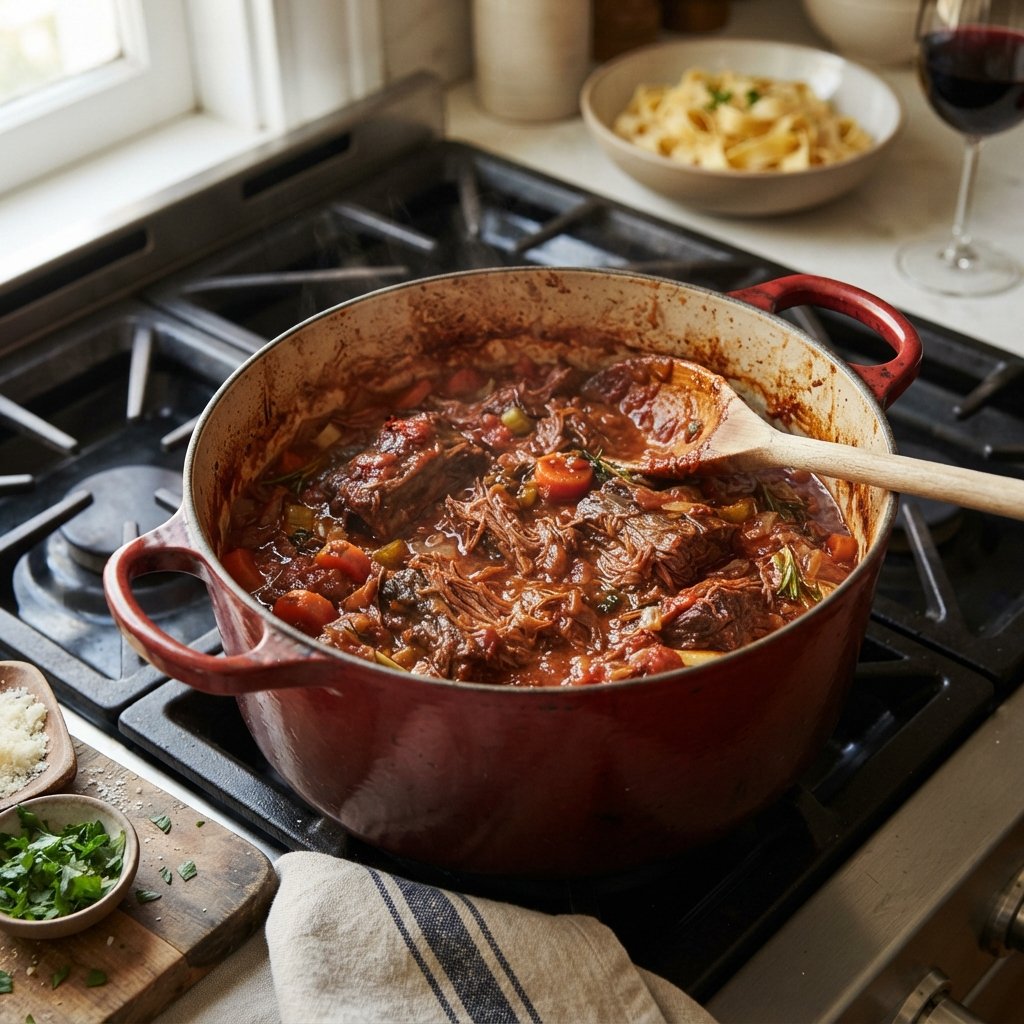
There are few culinary experiences quite as satisfying as the slow, low-and-slow transformation of a tough cut of meat into a meltingly tender masterpiece. The Dutch Oven Short Rib Ragu is the pinnacle of this alchemy. It is a dish that demands patience but rewards the cook with a depth of flavor that is impossible to achieve through quick cooking methods. Imagine a sauce so rich and unctuous that it coats the back of a spoon, filled with strands of beef that have surrendered their connective tissue to become silk, all simmering in a bath of red wine, tomatoes, and aromatic herbs.
This recipe is not just about dinner; it is about the ritual of cooking. It fills the kitchen with an aroma that signals comfort, home, and abundance. Whether you are serving it over a mound of fresh pappardelle, creamy polenta, or even a simple baked potato, this ragu is a celebration of rustic elegance. The Dutch oven, with its heavy lid and superior heat retention, acts as the perfect vessel, creating a sealed environment where moisture circulates, ensuring that every bite is succulent and flavorful.
The History
To understand this dish, one must look at two distinct culinary lineages: the vessel and the sauce.
The Vessel: The Dutch Oven
The Dutch oven has a history dating back to the early 18th century. While the exact origins are debated, it is widely attributed to an Englishman named Abraham Darby, who traveled to the Netherlands to observe how the Dutch cast brass pots. He returned to England and applied the technique to iron, creating the cast-iron pot we know today. These pots were revolutionary because they could withstand high heat, retain temperature for long periods, and were durable enough for open-fire cooking. In the context of modern cooking, the enameled cast-iron Dutch oven allows for the perfect Maillard reaction (searing) followed by the gentle, even heat required for braising.
The Sauce: Ragu
Ragu is an Italian meat-based sauce that is typically served with pasta. The word comes from the French ragoûter, meaning “to revive the taste.” Historically, ragu was a way for Italian families, particularly in the Emilia-Romagna and Lombardy regions, to utilize tougher, cheaper cuts of meat. By simmering these cuts for hours, the collagen broke down, creating a luxurious texture. While Ragu alla Bolognese is the most famous variant, regional variations abound. The Short Rib Ragu is a modern evolution, utilizing the beef short rib—a cut that was once considered offal or strictly for stock but is now prized for its intense beefy flavor and high fat content.
Ingredients Breakdown
The magic of a great ragu lies in the quality and balance of its components. Here is why each element is critical:
- Beef Short Ribs: We use bone-in English-cut short ribs. The bone adds gelatin to the sauce during the long braise, giving the liquid a velvety body. The meat itself is heavily marbled, which means it stays moist even after hours of cooking.
- The Aromatics (Soffritto): Onions, carrots, and celery form the flavor base. They need to be diced finely so they essentially dissolve into the sauce, providing sweetness and earthiness without distinct chunks.
- Tomato Paste: This is not just for color; it provides umami. Cooking the paste until it turns a dark brick red (caramelizing the sugars) removes the metallic tinny taste and deepens the savory profile.
- Red Wine: You need a dry, full-bodied wine. A Cabernet Sauvignon, Merlot, or Sangiovese works well. The acidity cuts through the fat of the beef, while the tannins add structure to the sauce. Avoid “cooking wine” as it is often salty and low quality.
- Stock: Beef stock is preferred for continuity of flavor, but a high-quality chicken stock can be used if you want a lighter taste. Homemade is best, but low-sodium store-bought works perfectly.
- Herbs: Fresh thyme and rosemary are woody herbs that can withstand long cooking times without losing their potency. A bay leaf adds a subtle, floral background note.
Step-by-Step Recipe (The Narrative)
Making this ragu is a journey in three acts: The Sear, The Build, and The Braise.
Act I: The Sear. The most crucial step for flavor development is browning the meat. Pat your short ribs completely dry with paper towels. Moisture is the enemy of browning; if the meat is wet, it will steam instead of sear. Heat your Dutch oven over medium-high heat with a generous amount of oil. Do not crowd the pan. Sear the ribs on all sides until they are a deep, dark mahogany brown. This creates the “fond”—those sticky, browned bits on the bottom of the pot that are pure flavor gold.
Act II: The Build. Once the meat is removed, you build the sauce in the same pot. Sauté your vegetables in the rendered beef fat. This infuses the oil with meatiness. Add the tomato paste and cook it, stirring constantly, until it darkens. Then, deglaze the pan with wine. Scrape the bottom of the pot vigorously to release the fond. This step ensures no flavor is left behind.
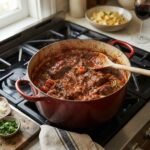
Act III: The Braise. Return the meat to the pot, submerge it in liquid (stock and crushed tomatoes), add your herbs, and bring it to a simmer. Cover the Dutch oven and transfer it to the oven. The low, ambient heat of the oven cooks the meat gently and evenly from all sides. After 3 to 4 hours, the meat should be falling off the bone. Remove the bones, shred the meat, and stir it back into the sauce. The result is a cohesive, rich ragu ready to serve.
Tips for Success
- Don’t Rush the Sear: If you try to sear all the meat at once, the temperature of the pan will drop, and the meat will boil in its own juices. Do it in batches.
- Skim the Fat: Short ribs are fatty. After braising, you may see a layer of oil on top. You can skim this off with a spoon for a lighter sauce, or leave it for maximum richness.
- The Pasta Water Trick: When tossing the ragu with pasta, reserve a cup of the starchy pasta water. Adding a splash of this to the sauce helps emulsify the fat and water, making the sauce cling to the noodles.
- Make it Ahead: Like most stews, this ragu tastes better the next day. The flavors have time to marry and mellow. It is an excellent meal-prep dish.
- Acid Balance: Taste your sauce before serving. If it tastes too heavy or flat, add a tiny splash of balsamic vinegar or red wine vinegar to brighten it up.
Variations and Customizations
While the classic recipe is divine, the Dutch oven is a forgiving vessel that welcomes experimentation.
- The Korean Twist: Add a tablespoon of Gochujang (Korean chili paste) and a splash of soy sauce during the braising liquid stage for a sweet, spicy, umami bomb.
- Mushroom Ragu: For a deeper earthiness, sauté a pound of cremini or porcini mushrooms with the onions and carrots.
- Creamy Ragu: Stir in a half-cup of heavy cream or a knob of butter right at the end of cooking for a luxurious, pink-hued sauce (similar to a Rose sauce).
- Spicy Arrabbiata Style: Add red pepper flakes or a chopped fresh chili when sautéing the garlic for a kick of heat.
- Pork and Beef Mix: Traditional Bolognese often uses a mix of meats. Try substituting half the short ribs with ground pork or pancetta for a different texture.
Health Considerations and Nutritional Value
Beef short ribs are a nutrient-dense food, but they are also calorie-dense.
- Protein: This dish is an excellent source of high-quality protein, essential for muscle repair and growth.
- Collagen: The long braising process breaks down collagen into gelatin. Consuming gelatin is beneficial for joint health, skin elasticity, and gut lining integrity.
- Iron and Zinc: Red meat is rich in heme iron, which is easily absorbed by the body, as well as zinc, which supports immune function.
- Caloric Density: Due to the fat content in short ribs and the addition of wine and oil, this is a high-calorie meal. Portion control is key if you are watching your weight.
- Sodium: Store-bought stocks and tomato products can be high in sodium. Using low-sodium versions and controlling added salt allows you to manage your intake.
- Vegetable Boost: To increase the nutritional profile, consider stirring in fresh spinach, kale, or peas during the last 5 minutes of cooking to add fiber and vitamins.
Ingredients
- 3 to 4 lbs beef short ribs (bone-in, English cut)
- 2 tbsp olive oil
- 1 large yellow onion, finely diced
- 2 large carrots, finely diced
- 2 celery stalks, finely diced
- 4 cloves garlic, minced
- 3 tbsp tomato paste
- 1 cup dry red wine (Cabernet or Merlot)
- 1 can (28 oz) crushed tomatoes
- 2 cups beef stock (low sodium preferred)
- 2 sprigs fresh thyme
- 2 sprigs fresh rosemary
- 2 bay leaves
- Salt and freshly cracked black pepper to taste
- 1 lb pasta (Pappardelle, Tagliatelle, or Rigatoni)
- Fresh parsley and Parmesan cheese for garnish
Directions
- Preheat and Prep: Preheat your oven to 325°F (160°C). Pat the short ribs dry with paper towels and season generously on all sides with salt and pepper.
- Sear the Meat: Heat the olive oil in a large Dutch oven over medium-high heat. Working in batches to avoid crowding, sear the short ribs until deeply browned on all sides (about 3-4 minutes per side). Remove meat and set aside on a plate.
- Sauté Vegetables: Reduce heat to medium. Add the onion, carrots, and celery to the pot. Cook, stirring occasionally, until softened and lightly browned (about 8 minutes). Add the garlic and cook for 1 minute until fragrant.
- Caramelize Paste: Stir in the tomato paste. Cook for 2-3 minutes, stirring constantly, until the paste turns a dark reddish-brown color.
- Deglaze: Pour in the red wine. Use a wooden spoon to scrape up all the browned bits (fond) from the bottom of the pot. Let the wine simmer for 3-4 minutes to reduce slightly and cook off the alcohol.
- Combine: Return the short ribs to the pot (nestle them into the vegetables). Pour in the crushed tomatoes and beef stock. The liquid should come about 3/4 of the way up the sides of the meat. Add the thyme, rosemary, and bay leaves.
- Braise: Bring the liquid to a simmer on the stovetop. Cover the Dutch oven with a tight-fitting lid and transfer to the preheated oven. Braise for 3 to 3.5 hours, turning the meat once halfway through, until the meat is fork-tender and falling off the bone.
- Shred: Remove the pot from the oven. Carefully remove the short ribs and set them on a cutting board. Discard the herb stems and bay leaves. Use two forks to shred the meat, discarding the bones and excess fat. Stir the shredded meat back into the sauce.
- Serve: Cook your pasta according to package directions until al dente. Toss the pasta directly into the Dutch oven with the ragu (add a splash of pasta water if it looks too thick). Serve immediately topped with fresh parsley and grated Parmesan cheese.
FAQ
Can I make this in a slow cooker?
Yes. Follow the searing and sautéing steps on the stovetop first to develop flavor, then transfer everything to a slow cooker. Cook on Low for 7-8 hours or High for 4-5 hours.
What if I don’t drink alcohol? Can I skip the wine?
You can substitute the wine with an equal amount of beef stock mixed with 1 tablespoon of red wine vinegar or balsamic vinegar to mimic the acidity.
Can I freeze this ragu?
Absolutely. This dish freezes beautifully. Let it cool completely, store in airtight containers or freezer bags, and freeze for up to 3 months. Thaw overnight in the fridge before reheating.
Why is my sauce too thin?
If the sauce is too runny after braising, remove the lid and simmer the sauce on the stovetop for 10-15 minutes to reduce and thicken it.
Can I use boneless short ribs?
Yes, but bone-in adds more flavor and gelatin to the sauce. If using boneless, reduce the cooking time slightly (check at 2.5 hours) as they cook faster.
Summary
This Dutch Oven Short Rib Ragu transforms tough, marbled beef into a luxurious, fall-apart tender sauce through hours of slow braising in red wine and tomatoes. It is the ultimate comfort food, perfect for serving over wide pasta noodles or creamy polenta for a restaurant-quality meal at home.