Introduction
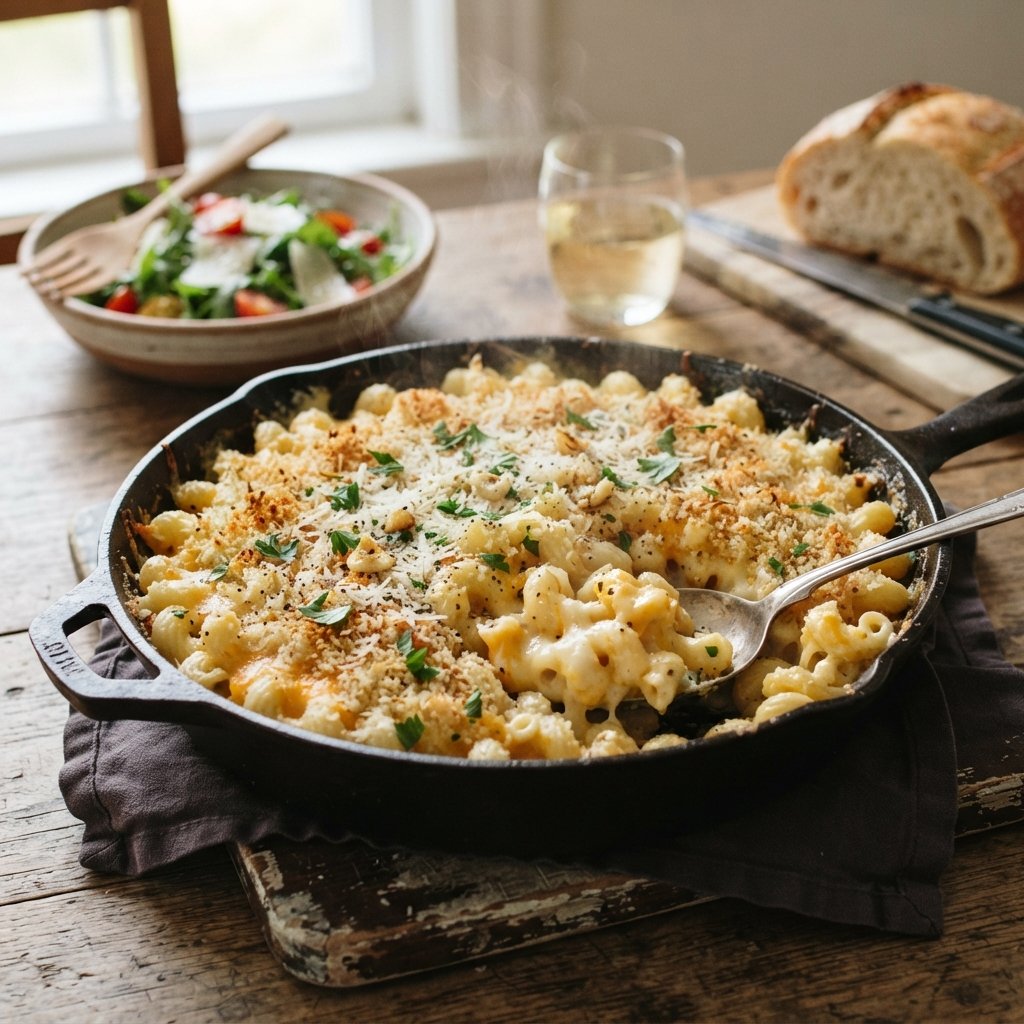
Few dishes in the culinary world possess the universal power to comfort, satisfy, and bring people together quite like a steaming bowl of macaroni and cheese. It is the culinary equivalent of a warm hug, a nostalgic reminder of childhood dinners, and a centerpiece for potlucks and holiday feasts alike. However, the classic American staple often finds itself in need of a sophisticated upgrade. Enter Garlic Parmesan Mac and Cheese, a dish that elevates the humble pasta casserole into a gourmet experience.
This recipe is not merely about melting cheese over noodles; it is a celebration of flavor profiles that complement one another perfectly. The sharp, nutty, and salty complexity of aged Parmesan cheese provides a robust backbone, while the aromatic, savory punch of fresh garlic cuts through the richness of the creamy béchamel sauce. Whether you are a seasoned home cook looking to impress dinner guests or a comfort food enthusiast seeking the ultimate indulgence, this Garlic Parmesan Mac and Cheese delivers a texture that is velvety smooth and a flavor that is deeply savory. Prepare to transform your kitchen into a sanctuary of aroma, where the scent of roasting garlic and bubbling cheese promises a meal that is nothing short of spectacular.
The History
To understand the gravity of this dish, one must look back at the lineage of macaroni and cheese itself. The origins of pasta and cheese baked together can be traced back to medieval Italy. The 14th-century cookbook Liber de Coquina features a recipe for “de lasanis,” which involved layering fermented pasta with cheese and spices, then baking it. However, the dish as we know it today traveled across the Atlantic, finding a particularly fervent following in the United States.
Thomas Jefferson is often credited with popularizing macaroni and cheese in America after encountering a pasta machine in Paris and serving a “macaroni pie” at a state dinner in 1802. For centuries, it remained a dish of the upper class, requiring expensive imported cheese and labor-intensive preparation. It wasn’t until the Great Depression and the invention of boxed macaroni in the 1930s that the dish became a pantry staple for the masses.
In recent decades, the “gourmet mac and cheese” movement has taken hold. Chefs and home cooks alike began rejecting the neon-orange powder of the boxed variety in favor of real cheese sauces and artisanal ingredients. The addition of garlic and Parmesan represents this modern evolution. It harkens back to Italian roots while embracing the creamy American style, creating a fusion dish that honors the history of comfort food while pushing its boundaries into new, flavorful territories.
Ingredients Breakdown
The success of Garlic Parmesan Mac and Cheese relies entirely on the quality and interaction of its components. Unlike simpler versions where any cheddar will do, this recipe demands precision.
The Cheese: Parmigiano-Reggiano vs. Domestic Parmesan
The star of the show is undoubtedly the cheese. While “Parmesan” is often used as a catch-all term, there is a distinct difference between pre-grated shakers and a block of Parmigiano-Reggiano. The authentic Italian variety is aged for at least 24 months, developing hard, crystalline textures and deep, umami-rich flavors. Domestic parmesan can be softer and saltier. For this recipe, a blend is often best: use high-quality Parmigiano-Reggiano for flavor depth and a younger, melt-friendly Parmesan or Gruyère to ensure the sauce remains silky rather than stringy.
The Garlic: Fresh is Non-Negotiable
In a dish named after garlic, the quality of the allium is paramount. Garlic powder or granulated garlic lacks the volatile oils that provide that signature pungent kick. This recipe utilizes fresh garlic cloves. You have two options: sautéing minced garlic in the butter at the beginning of the roux for a sharp, immediate bite, or roasting a whole head of garlic beforehand to mash into the sauce for a sweet, mellow, caramelized undertone. Both methods work, but roasting adds a layer of complexity that elevates the dish.
The Roux and The Liquid
The binding agent is a classic roux, a mixture of fat (butter) and flour cooked together. This prevents the sauce from separating. The liquid component is typically whole milk for maximum creaminess, though heavy cream can be added for an ultra-luxurious texture. Avoid skim milk, as the lack of fat content can lead to a grainy sauce.
Step-by-Step Recipe
Creating the perfect Garlic Parmesan Mac and Cheese is a process of patience and timing. Here is the narrative flow of how the dish comes together.
1. Preparation and Pasta Cooking
Begin by bringing a large pot of heavily salted water to a boil. The water should taste like the sea; this is your only chance to season the pasta itself. Add your elbow macaroni, cavatappi, or shells. Cook the pasta until it is just shy of al dente (usually one minute less than the package instructions). The pasta will continue to cook slightly when baked or mixed with the hot sauce. Drain the pasta and toss it with a tiny drizzle of olive oil to prevent sticking, then set aside.
2. The Garlic Infusion
While the water boils, prepare your garlic. If roasting, slice the top off a head of garlic, drizzle with oil, wrap in foil, and bake at 400°F (200°C) for 40 minutes until soft. If using fresh minced garlic, peel and finely mince 4 to 6 cloves. In a large, heavy-bottomed saucepan or Dutch oven, melt your butter over medium heat. If using minced garlic, add it now and sauté for 1-2 minutes until fragrant but not browned. If using roasted garlic, squeeze the soft cloves out of their skins and mash them into a paste, adding them later with the milk.
3. Building the Roux
Once the butter is melted and the garlic is fragrant, sprinkle the flour over the top. Whisk constantly for about 2 minutes. This cooking time is crucial to cook out the raw flour taste. The mixture should look like a thick, bubbling paste (the roux).
4. Creating the Béchamel
Begin adding your milk slowly, about a cup at a time, whisking vigorously after each addition to ensure no lumps form. As the milk incorporates, the mixture will thicken. Continue until all milk is added. Bring the sauce to a gentle simmer, stirring frequently. If you are using roasted garlic paste, stir it in now. Let the sauce simmer for 5-7 minutes until it coats the back of a spoon.
5. The Cheese Melt
Remove the sauce from the heat. This is a critical step; if the heat is too high, the cheese proteins will seize up and become oily or grainy. Gradually add your grated Parmesan cheese, stirring gently until melted and smooth. Season with salt, black pepper, and a pinch of nutmeg (which enhances the dairy flavor).
6. Assembly
Pour the drained pasta into the cheese sauce. Toss gently until every noodle is thoroughly coated in the glossy, white-gold sauce. At this stage, you can serve it immediately for a stovetop version, or transfer it to a baking dish, top with breadcrumbs, and bake at 375°F (190°C) for 20 minutes for a crispy crust.
Tips
- Grate Your Own Cheese: Pre-grated cheese is coated in cellulose (wood pulp) to prevent clumping in the bag. This coating prevents the cheese from melting smoothly into a sauce. Always buy blocks of Parmesan and grate them yourself using a microplane or box grater.
- Temperature Control: Never boil the cheese. Once the milk sauce is hot, turn off the burner before adding the cheese. High heat causes the proteins to tighten and squeeze out fat, resulting in a broken, oily sauce.
- Pasta Shape Matters: While elbows are traditional, shapes with nooks and crannies like cavatappi, fusilli, or shells hold the thick Parmesan sauce much better than smooth shapes like penne.
- Acidity Balance: Parmesan is salty and rich. A tiny splash of white wine added to the roux before the milk, or a squeeze of lemon juice at the very end, can cut through the fat and brighten the overall flavor profile.
- Reserve Pasta Water: Before draining your pasta, save a cup of the starchy cooking water. If your cheese sauce becomes too thick, thin it out with the pasta water rather than more milk; the starch helps emulsify the sauce.
Variations and Customizations
While the Garlic Parmesan combination is perfect on its own, it serves as an excellent canvas for customization.
The “Cacio e Pepe” Twist
Inspired by the Roman classic, add a generous amount of freshly cracked black pepper and swap half the Parmesan for Pecorino Romano for a sharper, spicier kick.
Protein Additions
Crispy Pancetta: Fry diced pancetta until crisp and sprinkle it on top before serving. The saltiness pairs beautifully with the garlic.
Grilled Chicken: Cube leftover rotisserie chicken or grilled breast and fold it into the mac for a complete meal.
Shrimp: Sautéed garlic shrimp placed on top turns this into a surf-and-turf style comfort dish.
Vegetable Integrations
To add color and nutrition, fold in steamed broccoli florets, sautéed spinach, or roasted cherry tomatoes. The acidity of the tomatoes works particularly well against the heavy cheese.
The Topping
For texture contrast, create a Pangrattato topping. Mix breadcrumbs with melted butter, dried oregano, and extra parmesan, then toast them in a skillet or under the broiler until golden brown.
Health Considerations and Nutritional Value
Garlic Parmesan Mac and Cheese is an indulgence, and it should be treated as such. It is calorie-dense, primarily due to the dairy content.
- Calories: A standard serving can range from 400 to 600 calories depending on the portion size and the fat content of the milk and cheese used.
- Fat Content: This dish is high in saturated fats. However, recent studies suggest that fermented dairy fats (like those in aged cheese) may have different metabolic effects than other saturated fats.
- Sodium: Parmesan is naturally high in sodium. If you are watching your salt intake, be mindful of how much extra salt you add to the boiling water or the sauce.
- Calcium and Protein: On the positive side, this dish is an excellent source of calcium and protein, thanks to the milk and cheese.
- Healthier Swaps: To lighten the dish, you can substitute half the milk with cauliflower puree (which adds creaminess without the fat), use whole wheat pasta for added fiber, or mix in a large volume of vegetables to increase the serving size without increasing the calorie count significantly.
Ingredients
- Pasta: 1 pound (16 oz) of elbow macaroni, cavatappi, or shells.
- Butter: 4 tablespoons (1/2 stick) of unsalted butter.
- Garlic: 1 whole head (for roasting) OR 6 large cloves (fresh, minced).
- Flour: 1/4 cup all-purpose flour.
- Milk: 4 cups whole milk (warmed slightly helps prevent lumps).
- Parmesan Cheese: 3 cups freshly grated Parmigiano-Reggiano or high-quality Parmesan.
- Seasoning: 1 teaspoon salt (adjust to taste), 1/2 teaspoon black pepper, 1/4 teaspoon nutmeg (optional).
- Optional Topping: 1/2 cup Panko breadcrumbs mixed with 1 tablespoon melted butter.
Directions
- Preheat Oven: If baking, preheat your oven to 375°F (190°C). Grease a 9×13 inch baking dish.
- Cook Pasta: Boil a large pot of salted water. Cook pasta according to package directions until al dente. Drain and set aside.
- Prepare Garlic: If roasting, wrap the garlic head in foil and bake for 40 mins. If using fresh, mince finely.
- Make Roux: In a large pot or Dutch oven, melt butter over medium heat. Add minced garlic (if using fresh) and cook for 1 minute. Whisk in flour and cook for 2 minutes, stirring constantly.
- Add Milk: Slowly whisk in the warm milk, ensuring no lumps form. Bring to a simmer and cook for 5-7 minutes until thickened. Stir in roasted garlic paste if using.
- Melt Cheese: Remove pot from heat. Gradually stir in the grated Parmesan cheese until smooth. Season with salt, pepper, and nutmeg.
- Combine: Add the cooked pasta to the sauce and stir to coat evenly.
- Bake (Optional): Transfer to the baking dish. Top with breadcrumb mixture. Bake for 20 minutes until bubbly and golden.
- Serve: Let cool for 5 minutes before serving to allow the sauce to set slightly.
FAQ
Can I freeze Garlic Parmesan Mac and Cheese?
Yes, but with caution. Dairy-based sauces can sometimes separate when thawed and reheated. To freeze, undercook the pasta slightly, assemble the dish, and freeze before baking. Thaw in the refrigerator overnight before baking. Add a splash of milk when reheating to restore creaminess.
Why is my cheese sauce grainy?
Graininess usually happens for two reasons: the heat was too high when the cheese was added, causing the proteins to seize, or you used pre-grated cheese containing anti-caking agents. Always remove the sauce from the heat before adding cheese and grate your own blocks.
Can I make this gluten-free?
Absolutely. Substitute the all-purpose flour with a 1:1 gluten-free baking flour for the roux, and use your favorite gluten-free pasta shape. Brown rice pasta holds up well in baked dishes.
How long does leftover mac and cheese last?
Stored in an airtight container in the refrigerator, it will last for 3 to 4 days. Reheat in the microwave with a damp paper towel over the top to keep the pasta from drying out.
Summary
This Garlic Parmesan Mac and Cheese transforms a classic comfort staple into a gourmet delight through the use of fresh aromatics and high-quality aged cheeses. It offers a rich, velvety texture and a savory depth that makes it the ultimate indulgent meal for any occasion.